Best Home Saunas by Type: Traditional, Infrared and Outdoor Picks
You have decided you want a home sauna. Now you are staring at a dozen product pages, each one promising the perfect heat, and you cannot tell which one actually fits your garage corner, your basement, or the patch of yard behind the fence. The confusion is real: a 4 kW infrared panel and a 6 kW electric heater do not produce the same experience, a barrel that looks charming in a catalog photo may not clear your ceiling height, and an outdoor cabin that fits your lot may need a permit you did not budget for.
This guide walks through the four main types of home sauna, one strong pick per type, with the specs that matter: room size, heater power, electrical demand, and what you should expect to pay. No testing claims, no sponsored placements. Just the numbers and trade-offs you need to make a decision.
Prices and availability shift often in this market. Check current listings before you buy.
Key takeaways
- Traditional electric saunas give you the highest heat and the option of steam; infrared cabins heat faster and use less power but cannot produce löyly.
- A barrel sauna is a compact outdoor option that fits tight yards but demands a level, drained base and weather-rated wood.
- Outdoor cabins offer the most room and the best experience for groups, but they carry the highest cost and the most permit and foundation work.
- Match heater kW to room volume: undersized heaters run constantly and never reach temperature, oversized heaters cycle too fast and feel harsh.
- Budget for the electrical work separately. A 240V dedicated circuit with the right breaker and wire gauge is not optional.
Traditional Indoor Saunas: The Finnish Standard
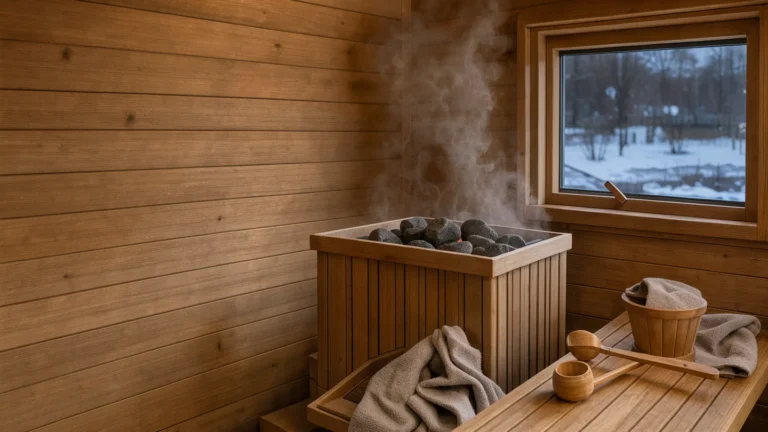
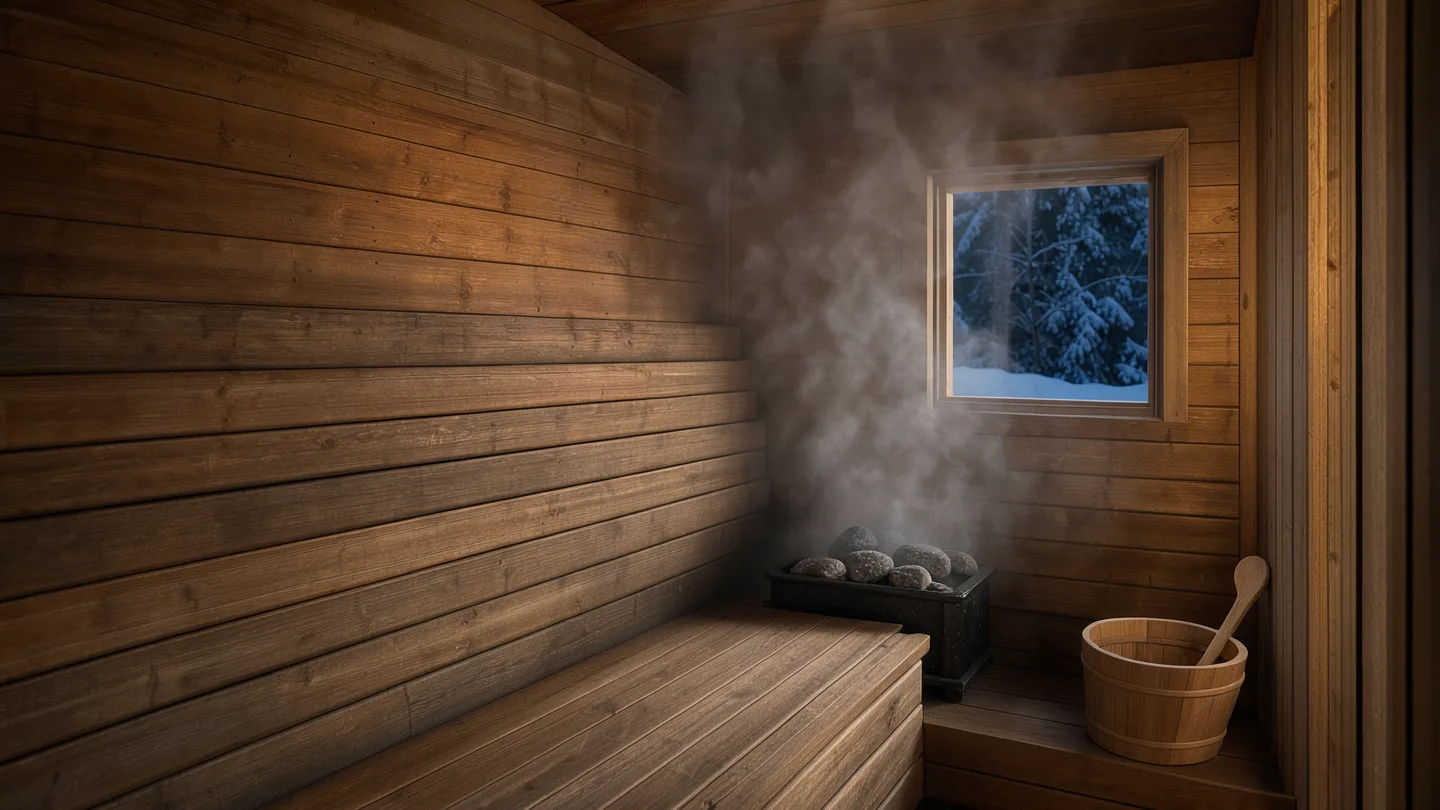
A traditional home sauna uses an electric or wood-fired heater to heat air and stones in a closed room. You sit in hot air, you throw water on the stones to make steam (that burst of steam is löyly, the moment that separates a real sauna from a hot box), and the room holds that heat because the walls are insulated and lined with wood.
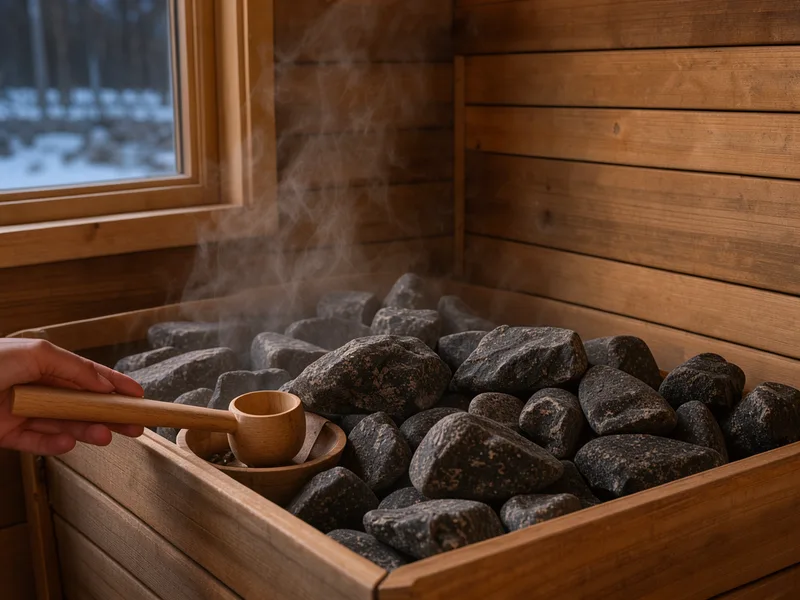
For an indoor traditional sauna, look for a kit or a custom build with a heater sized to your room volume. The rule of thumb most manufacturers use is roughly 1 kW per 40 to 50 cubic feet of room space, though a glass door or a poorly insulated wall pushes that number up. A 6 kW heater handles a room of about 250 to 300 cubic feet comfortably. A 9 kW heater covers 400 to 500 cubic feet.
Harvia and Tylo are the two names you will see most often in US residential installations. Harvia heaters are Finnish-made, widely available through US distributors, and their manuals give clear kW-to-volume charts. Tylo heaters are Swedish, slightly more expensive, and known for quiet operation and good serviceability. Both offer 240V electric models in the 3 kW to 9 kW range that a licensed electrician can wire to a dedicated circuit.
A typical indoor traditional sauna kit (walls, benches, heater, door, lighting) runs from about $3,000 to $10,000 depending on size and wood species. A custom build with your own framing and paneling can come in lower on materials but higher on labor if you hire help.
Infrared Cabins: Fast Heat, Lower Power
An infrared sauna uses panels that emit infrared radiation, which warms your skin directly rather than heating the air around you. The room reaches 120 to 150°F (49 to 66°C) instead of the 170 to 200°F (77 to 93°C) of a traditional sauna. You feel warm, but the air is not hot enough to throw water on stones and make steam. If you want löyly, an infrared cabin will not give it to you.
The advantage is speed and power draw. An infrared cabin reaches usable temperature in 10 to 15 minutes and typically draws 1 to 3 kW total, which means many models plug into a standard 120V outlet. No dedicated 240V circuit, no electrician, no permit for the electrical work.
Clearlight and Sunlighten are the two US brands most commonly reviewed in this category. Clearlight cabins use full-spectrum infrared panels and are built in the US. Sunlighten offers multiple panel configurations and a wider price range. Both make 1-person and 2-person cabins that fit in a spare room or a large bathroom.
Expect to pay $2,000 to $8,000 for a quality infrared cabin. The lower end is a basic 1-person cedar cabin with carbon panels. The upper end is a 2-person cabin with full-spectrum panels, chromotherapy lighting, and a Bluetooth sound system.
Barrel Saunas: Compact Outdoor Heat
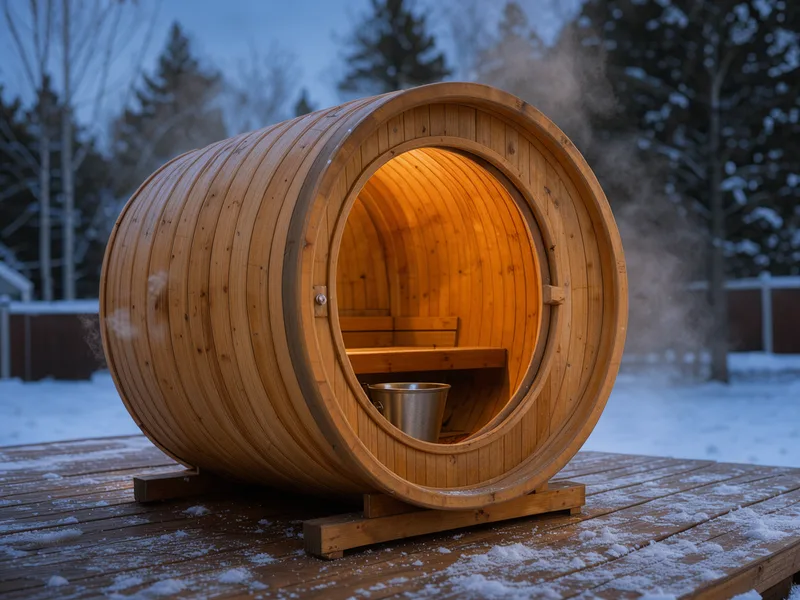
A barrel sauna is a traditional sauna (electric or wood-fired heater, hot air, steam) built into a cylindrical wooden shell. The shape is structurally efficient, which means less material and a smaller footprint than a rectangular cabin. Most barrel saunas hold 2 to 4 people and sit on a concrete pad, a gravel base, or a wooden platform in your yard.
The barrel form has limits. The curved walls mean the interior height at the center is typically 6 to 7 feet, which is fine for sitting but tight for standing. If you are over 6 feet tall, check the interior headroom spec before you buy. The wood must be rated for outdoor exposure: cedar and thermally modified aspen handle weather well, but untreated spruce will gray and crack within a few seasons.
Harvia makes barrel models (the Harvia Cilindro heater pairs well with barrel shells), and several US and Canadian manufacturers build barrel shells to fit standard heaters. A barrel sauna kit with heater typically runs $3,000 to $8,000. Add $500 to $1,500 for a proper base and delivery if your site is not level.
Outdoor Cabins: Room for Groups and Steam
An outdoor sauna cabin is a full rectangular structure, usually 6 by 8 feet or larger, with a traditional heater, benches, and a door. This is the type that gives you the most room, the best steam, and the most comfortable experience for two or more people. It is also the most expensive and the most work: foundation, permit, electrical run from your panel, and weatherproofing.
A 6 by 8 foot outdoor cabin with a 6 to 9 kW heater holds 4 to 6 people comfortably. You will need a concrete slab or a compacted gravel pad with a moisture barrier underneath. Most US jurisdictions require a building permit for a detached structure over 100 to 200 square feet, and an electrical permit for the 240V run. Check with your local building department before you order materials.
Pre-built outdoor sauna cabins from manufacturers like Harvia, Tylo, and several US-based builders run $5,000 to $15,000 for the structure and heater. A custom build with your own framing can come in lower on materials but expect to spend on a licensed electrician for the circuit ($300 to $800 depending on distance from your panel) and on the foundation.
| Type | Typical capacity | Heater power | Electrical need | Heat-up time | Typical price range |
|---|---|---|---|---|---|
| Traditional indoor kit | 2 to 6 people | 3 to 9 kW | 240V dedicated circuit | 30 to 60 minutes | $3,000 to $10,000 |
| Infrared cabin | 1 to 2 people | 1 to 3 kW total | 120V plug-in (most models) | 10 to 15 minutes | $2,000 to $8,000 |
| Barrel sauna (outdoor) | 2 to 4 people | 5 to 8 kW | 240V dedicated circuit | 30 to 45 minutes | $3,000 to $8,000 |
| Outdoor cabin | 4 to 8 people | 6 to 12 kW | 240V dedicated circuit | 45 to 90 minutes | $5,000 to $15,000 |
How to Match a Sauna to Your Space and Budget
Before you pick a product, answer three questions in order.
First: where will it go? A basement or large bathroom suits an indoor traditional kit or an infrared cabin. A backyard with a level, drained spot suits a barrel or an outdoor cabin. A garage corner works for an infrared cabin or a small traditional kit, but check ceiling height and ventilation.
Second: what do you want the experience to be? If you want steam, löyly, and the highest heat, you need a traditional heater (electric or wood-fired). If you want a quick warm session with minimal setup, an infrared cabin gets you there faster and cheaper on the electrical side.
Third: what is your total budget including the work around the sauna? The sauna itself is often 60 to 70 percent of the total cost. The rest goes to electrical work, foundation, permits, and delivery. A $4,000 barrel sauna can become a $6,000 project once you add a concrete pad and a 240V run.
Frequently asked questions
Can I plug an infrared sauna into a regular outlet?
Most 1-person and 2-person infrared cabins draw 1 to 1.5 kW and plug into a standard 120V, 15 or 20 amp household outlet. Larger 3 or 4-person models may need a dedicated 20 amp circuit. Check the manufacturer's spec sheet for the exact amperage draw and make sure your circuit is not shared with other high-draw appliances.
Do I need a permit for a home sauna?
Indoor saunas in an existing room usually do not require a building permit, but the 240V electrical work almost always requires an electrical permit. Outdoor saunas over 100 to 200 square feet typically need a building permit, and some jurisdictions require one for any detached structure. Check with your local building department before you start.
What size heater do I need for my sauna room?
Most manufacturers size heaters by room volume. A common rule is 1 kW per 40 to 50 cubic feet for a well-insulated room with a solid door. A glass door, a vaulted ceiling, or a room with exterior walls pushes that to 1 kW per 30 to 40 cubic feet. When in doubt, size up slightly: an oversized heater cycles on and off, while an undersized one runs constantly and never reaches temperature.
Is a barrel sauna good for cold climates?
Yes, if the wood is rated for outdoor exposure and the base drains well. Cedar and thermally modified aspen handle freeze-thaw cycles better than untreated softwoods. A barrel in a cold climate will take longer to heat up (the shell is colder at the start), so size the heater slightly larger than the manufacturer's minimum for your volume.
Can I use a wood-fired heater indoors?
No. Wood-fired saunas produce combustion gases and require a chimney or flue. They belong outdoors or in a structure built for a chimney. Indoor saunas use electric heaters.
A Note on This Guide
This article compares sauna types and points to well-known manufacturers whose products are widely available in the US market. We do not test products ourselves. The specs and price ranges reflect what these manufacturers publish in their manuals and what US distributors list. Prices shift with lumber costs, shipping, and demand, so verify current figures before you commit to a purchase.
When you are ready to narrow down a specific model, read the manufacturer's installation manual first. It tells you the clearance to combustibles (the minimum distance the heater must sit from wood walls and benches), the exact electrical requirements, and the warranty terms. That manual is more useful than any review.