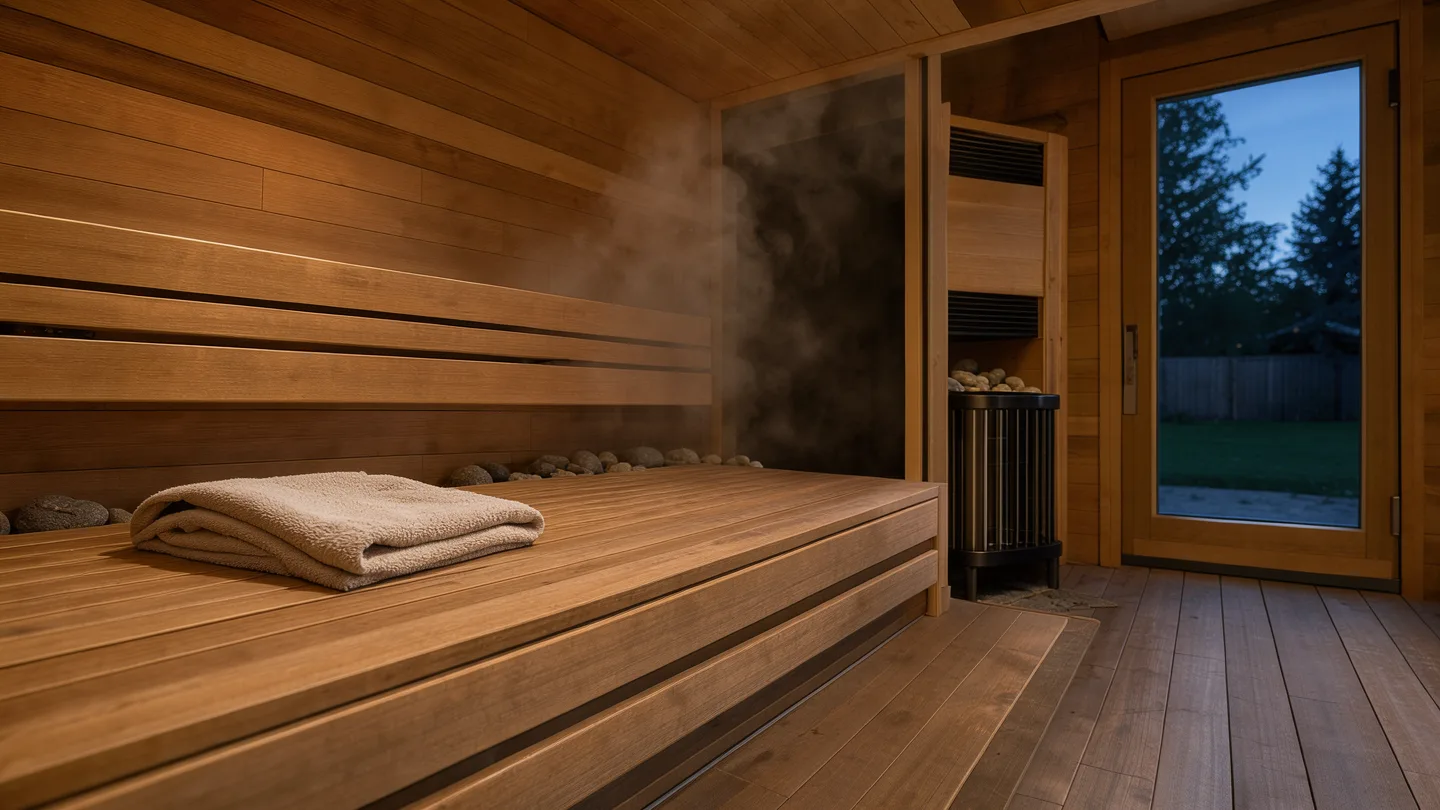
Infrared Sauna vs Traditional Sauna: An Honest Comparison
You have been scrolling listings for a week. One cabin glows with carbon panels and promises a gentle 140°F. Another has a cast-iron stove, a stack of stones, and a price tag three times higher. Both are called saunas. Both will make you sweat. But they are not the same experience, and the difference matters when you are about to spend real money.
This article puts them side by side: how each one heats your body, what it costs to buy and to run, what your electrician needs to know, and where each one falls short. No marketing language, no health promises. Just the practical comparison you need before you commit.
What you need to know before you choose
- A traditional sauna heats the air and stones; an infrared cabin radiates heat at your skin. The air temperature in a traditional sauna is 150 to 212°F, while infrared cabins typically run 120 to 150°F.
- Infrared cabins cannot produce löyly (the steam you make by throwing water on hot stones). If you want that experience, you need a traditional sauna with a stove and stones.
- Most infrared cabins plug into a standard 120V outlet. Most traditional saunas need a dedicated 240V circuit, which means an electrician visit and a permit.
- Infrared cabins are usually smaller and cheaper to buy. Traditional saunas cost more upfront but give you a wider range of heat and humidity.
- Running costs are lower for infrared, but the gap narrows if your traditional sauna is well insulated and you run it in longer sessions.
How each one heats you
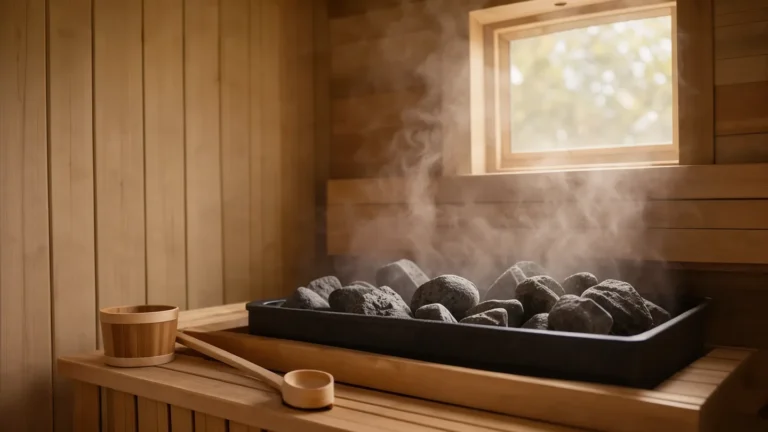
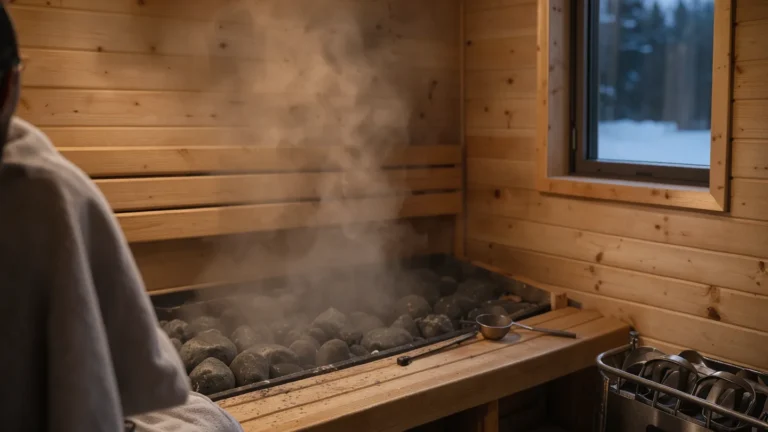
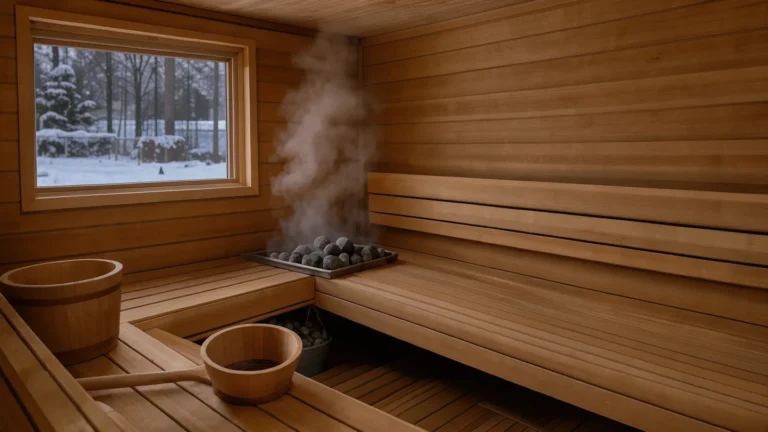
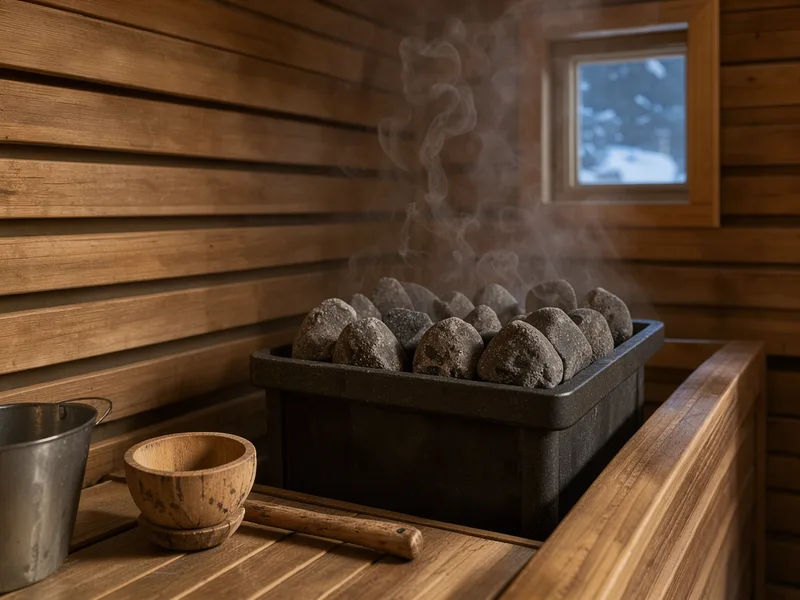
A traditional Finnish sauna works by heating the air. An electric or wood-fired stove warms a pile of stones, and those stones radiate heat into the room. The air itself climbs to 150, 180, even 212°F. Your skin heats up because the hot air surrounds you. You can throw water on the stones to create a burst of steam called löyly, which raises humidity briefly and makes the heat feel sharper on your skin.
An infrared cabin works differently. Carbon or ceramic panels in the walls and ceiling emit infrared radiation, the same kind of energy the sun sends you. That radiation passes through the air and warms your skin directly. The air inside stays cooler, usually between 120 and 150°F, because the panels are not trying to heat the whole room volume. You still sweat, but the sensation is more like standing in sunlight than sitting in a hot box.
Neither method is "better" in the abstract. They produce different experiences, and your preference will depend on what you are after.
Temperature and how it feels
This is where people get confused, because both types make you sweat and both are called saunas.
In a traditional sauna, the air is genuinely hot. At 190°F, the room feels intense within a few minutes. You can adjust the experience by adding water to the stones, which raises humidity and makes the heat feel heavier. The upper bench is hotter than the lower bench because hot air rises. You control the experience with temperature, humidity, and where you sit.
In an infrared cabin, the air is warm but not hot. At 130°F, you can sit comfortably for 30 or 40 minutes. The heat penetrates your skin more evenly because it comes from all directions. There is no humidity control, no steam, no bench hierarchy. The experience is more uniform and less intense.
If you have used a gym sauna or a Finnish public sauna and loved the blast of heat and the hiss of water on stones, an infrared cabin will feel flat by comparison. If you find traditional saunas too intense and want a gentler, longer session, infrared may suit you better.
Warm-up time
A traditional sauna with an electric heater typically takes 30 to 60 minutes to reach operating temperature, depending on room size, insulation, and heater power. A wood-fired stove can take longer on first fire, sometimes 90 minutes or more for a cold start.
An infrared cabin is ready in 10 to 20 minutes. The panels heat up quickly and you feel the radiation almost immediately. If you want to walk in and sit down within 15 minutes, infrared wins on convenience.
Electrical requirements
This is a practical difference that affects your budget and your timeline.
Most infrared cabins rated for home use draw 1,200 to 1,800 watts and plug into a standard 120V, 15A or 20A household outlet. You can often set one up without an electrician, though you should still check that the circuit is not shared with other heavy loads.
Most traditional saunas with electric heaters draw 4.5 to 9 kW and require a dedicated 240V circuit, typically 30 to 50 amps. That means a licensed electrician, a permit in most US jurisdictions, and a subpanel or dedicated breaker. Budget $300 to $800 for the electrical work alone, depending on your panel capacity and distance from the sauna location.
If your infrared cabin is a larger model (six-person or more), some manufacturers specify 240V as well. Check the manual before you assume a standard outlet will do.
Footprint and placement
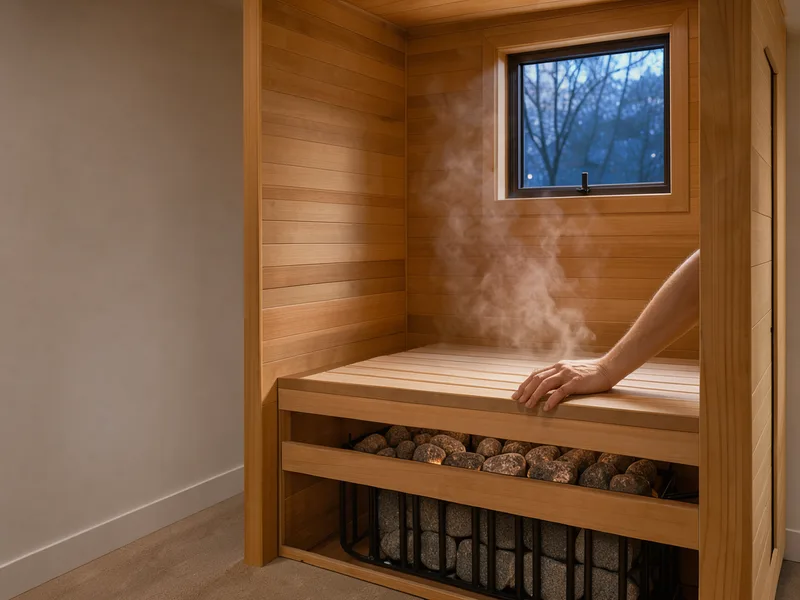
Infrared cabins are compact. A typical two-person model measures about 4 feet by 4 feet, with a height around 7 feet. They fit in a bathroom corner, a bedroom, a garage nook, or a spare room. They are often delivered as a pre-assembled or flat-pack unit that one or two people can set up in an afternoon.
Traditional saunas range more widely. A small barrel sauna might be 6 feet in diameter. A custom-built room can be 8 by 10 feet or larger. You need more floor space, more headroom, and usually a dedicated room or outdoor structure. A barrel sauna can go in a backyard on a level pad. A custom build in a basement or garage requires framing, insulation, vapor barrier, and paneling work.
If your space is tight, infrared is the easier fit. If you have a spare room, a garage corner, or outdoor space, a traditional sauna gives you more room to stretch out and a more authentic experience.
Price ranges
These are typical US market ranges for residential units, not exact quotes. Prices vary by brand, size, wood species, and whether you buy a kit or build from scratch.
Infrared cabins: $1,500 to $6,000 for a two- to four-person unit. Larger or premium models with full-spectrum panels can reach $8,000.
Traditional sauna kits: $3,000 to $10,000 for a pre-cut kit you assemble yourself, plus $1,500 to $4,000 for the heater. A custom-built room with professional labor can run $8,000 to $20,000 or more depending on size and finish.
Barrel saunas (outdoor, traditional): $4,000 to $12,000 delivered, plus delivery and site prep.
The gap is real. An infrared cabin is cheaper to buy, cheaper to install electrically, and often cheaper to run. A traditional sauna costs more upfront but gives you a wider range of heat and humidity control.
Running cost
Running cost depends on heater power, session length, and your local electricity rate. Here is a worked example so you can plug in your own numbers.
Traditional sauna: 6 kW heater, 45-minute session, $0.15 per kWh. That is 6 × 0.75 × 0.15 = $0.68 per session.
Infrared cabin: 1.5 kW total panel draw, 30-minute session, $0.15 per kWh. That is 1.5 × 0.5 × 0.15 = $0.11 per session.
The infrared cabin costs less per session because it draws less power and runs shorter sessions. But if you run your traditional sauna for a full hour with the heater cycling on and off, the gap narrows. A well-insulated traditional sauna with a 6 kW heater that cycles at 50% duty over 60 minutes uses about 3 kWh, or $0.45 at $0.15 per kWh. Still more than infrared, but not dramatically so.
| Feature | Infrared cabin | Traditional sauna |
|---|---|---|
| Heating method | Infrared panels radiate heat at your skin | Stove heats air and stones; hot air surrounds you |
| Typical air temperature | 120 to 150°F (49 to 66°C) | 150 to 212°F (65 to 100°C) |
| Warm-up time | 10 to 20 minutes | 30 to 60 minutes (electric); 60 to 90+ (wood-fired) |
| Electrical | Usually 120V, 15 to 20A standard outlet | Usually 240V, 30 to 50A dedicated circuit |
| Typical footprint | 4 x 4 ft (two-person) | 6 x 6 ft to 8 x 10 ft or larger |
| Typical purchase price | $1,500 to $6,000 | $3,000 to $15,000+ (kit or custom) |
| Running cost per session | $0.10 to $0.30 | $0.40 to $1.00 |
| Löyly (steam from water on stones) | Not possible | Yes, core feature |
| Humidity control | None | Yes, via löyly |
| Best for | Short, gentle sessions; tight spaces; low install cost | Authentic heat, steam, longer sessions, social use |
The löyly question
Löyly is the Finnish word for the steam you create by throwing a ladle of water on the hot stones. It raises humidity for a few minutes, makes the heat feel sharper, and is the ritual at the center of traditional sauna culture.
An infrared cabin has no stones and no way to create steam. The panels are not designed to get wet, and there is no thermal mass to hold heat and release it as vapor. If you have ever sat in a Finnish sauna and loved that moment when the water hits the stones and the room fills with a soft hiss and a wave of warmth, an infrared cabin will not give you that. It is not a small difference. It is the difference between a campfire and a space heater.
This does not make infrared a bad choice. It makes it a different choice. Be honest with yourself about whether you want steam or not.
Who should pick which
Pick an infrared cabin if:
You want a sauna in a small space, like a bathroom, bedroom, or garage corner. You want a lower upfront cost and no electrician visit. You prefer a gentler, lower-temperature session of 20 to 40 minutes. You do not care about steam or löyly. You want something you can set up in a weekend and use on a Tuesday evening without a 45-minute warm-up.
Pick a traditional sauna if:
You want the authentic Finnish experience: hot air, stones, steam, and the ritual of löyly. You have the space for a dedicated room, a barrel in the yard, or a custom build. You are willing to hire an electrician for a 240V circuit and pull a permit. You want to adjust heat and humidity over a longer session. You value the social and sensory experience of a real sauna over convenience.
If you are on the fence, ask yourself this: when you picture your ideal sauna session, do you hear the hiss of water on stones? If yes, go traditional. If you picture a quiet, warm room where you sit and read or meditate, infrared may be the better fit.
Running cost per session
Enter your heater power, session length, and local electricity rate to estimate what one sauna session costs you.
Estimated cost per session $
Common questions about infrared vs traditional saunas
Can I add steam to an infrared cabin?
No. Infrared panels are not designed to get wet, and there are no stones to throw water on. Some manufacturers sell small steam generators as add-ons, but these are not löyly and they change the electrical and moisture profile of the cabin. Check your manual before adding any water source.
Is an infrared sauna less effective than a traditional one?
Both make you sweat and both raise your core temperature. The experience is different, not lesser. Infrared runs at lower air temperatures, so it feels gentler. Traditional saunas run hotter and let you control humidity. Neither is a medical treatment. Choose based on the experience you want.
Do I need a permit for an infrared cabin?
Usually not, because it plugs into a standard outlet. But local rules vary. If you are hardwiring a larger model to 240V, you will likely need a permit and an electrician, just like a traditional sauna.
Can I put a traditional sauna in a basement?
Yes, but basements need attention to ventilation and moisture. A traditional sauna produces a lot of water vapor, especially with löyly. Without proper ventilation and a vapor barrier, you risk mold in the walls. Get the ventilation right before you build.
Which type holds heat better between sessions?
A traditional sauna with a well-insulated room and a good stove holds heat longer because the stones and air mass store thermal energy. An infrared cabin cools quickly once the panels switch off. If you want to run back-to-back sessions, traditional is more efficient.
Are infrared panels safe?
Carbon and ceramic panels are designed for sauna use and operate within safe temperature ranges. They do not emit UV radiation. Follow the manufacturer's clearance and usage instructions. There is no evidence that normal sauna use of infrared panels causes harm, but this is not a medical claim.