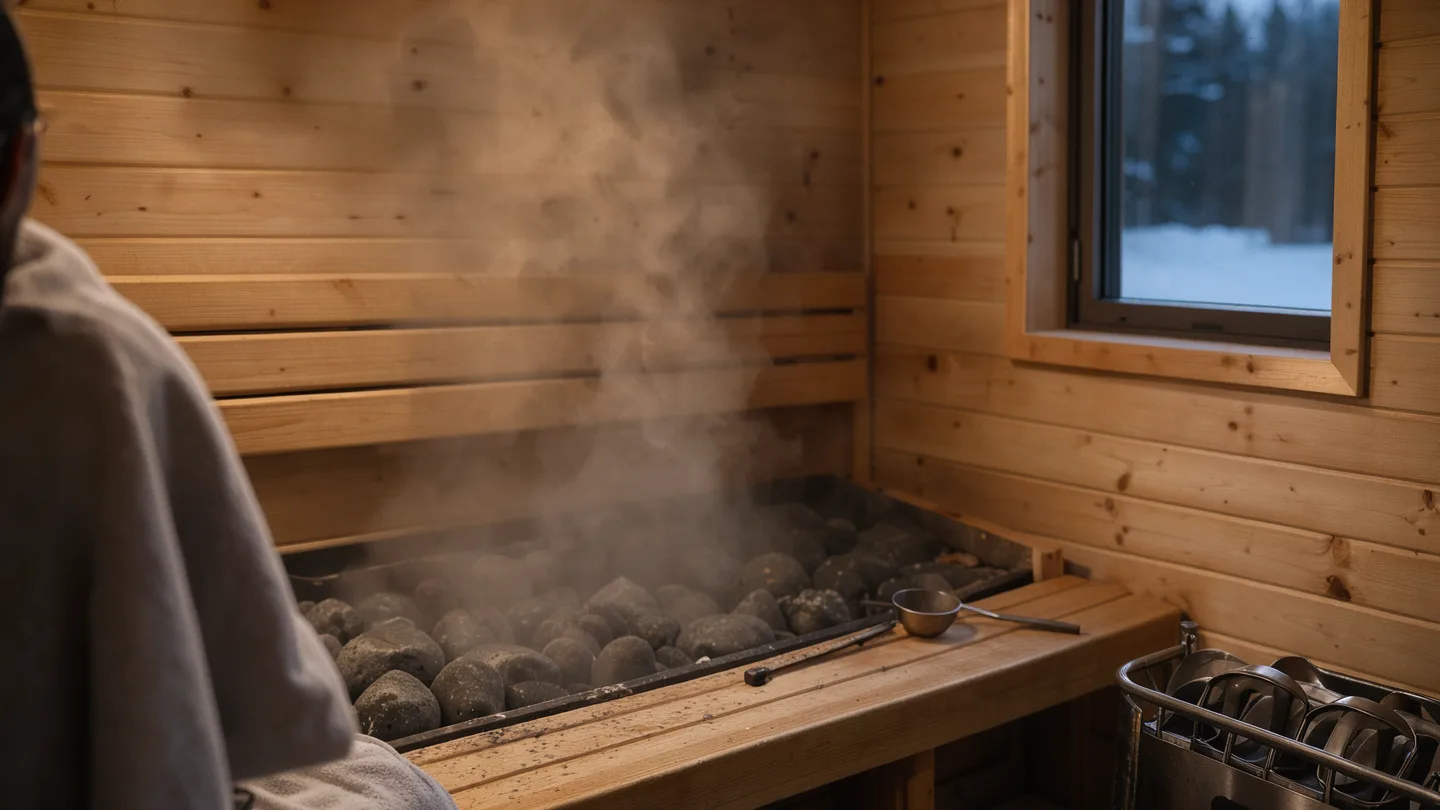
Sauna Temperature: How Hot Should a Sauna Be?
You step into a sauna for the first time and the thermometer on the wall reads 180°F. Your friend says that is normal. Your neighbor says 150°F is plenty. You want to know what is right for you, and whether the number on the dial is the whole story.
It is not. Sauna temperature is a starting point, not a destination. Where you sit, whether you throw water on the stones, and whether your heater is traditional or infrared all change what your skin actually feels. This article walks through the standard range, the bench effect, the steam effect, and what to set when you are new to the room.
Key takeaways
- A traditional Finnish sauna runs 150 to 195°F (65 to 90°C), and most owners settle around 170 to 180°F for regular use.
- The upper bench can sit 20 to 30°F hotter than the lower bench because hot air rises and pools at ceiling level.
- Löyly, the practice of throwing water on heater stones, raises humidity and makes the same air temperature feel significantly hotter.
- Infrared saunas typically run 120 to 150°F (49 to 65°C) because they heat your body directly rather than the air around you.
- Beginners should start at the lower end of the range, on the lower bench, for 10 to 15 minutes, and build up over several sessions.
The Standard Range for a Traditional Sauna
A traditional Finnish sauna, the kind with a heater that warms stones and a room full of hot air, runs between 150 and 195°F (65 to 90°C). That is the range you will see in every manufacturer manual, every Finnish sauna guide, and every heater spec sheet.
Most home sauna owners land somewhere between 170 and 180°F for regular sessions. That is hot enough to sweat within five minutes but not so hot that you cannot stay in for a full 15 to 20 minutes. If you are building a custom sauna and choosing a heater, size the heater for the room volume in cubic feet, and the temperature will settle where the heater output and the room insulation meet.
There is no single "correct" temperature. A Finnish sauna at 150°F with heavy löyly can feel as intense as a dry sauna at 190°F. The number on the thermometer is one variable among several.
Upper Bench vs Lower Bench
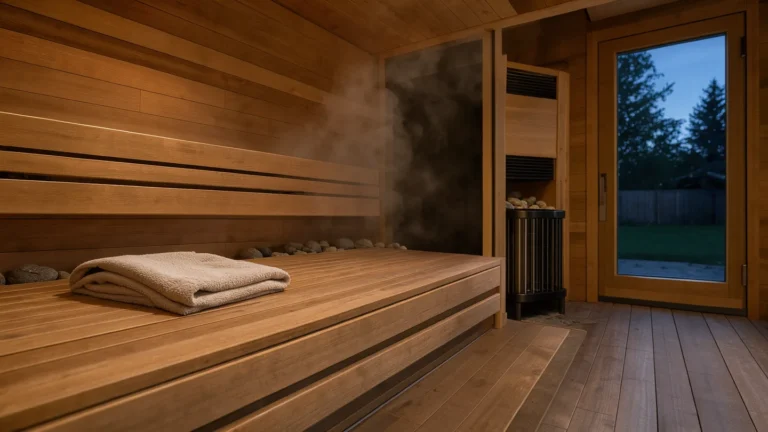
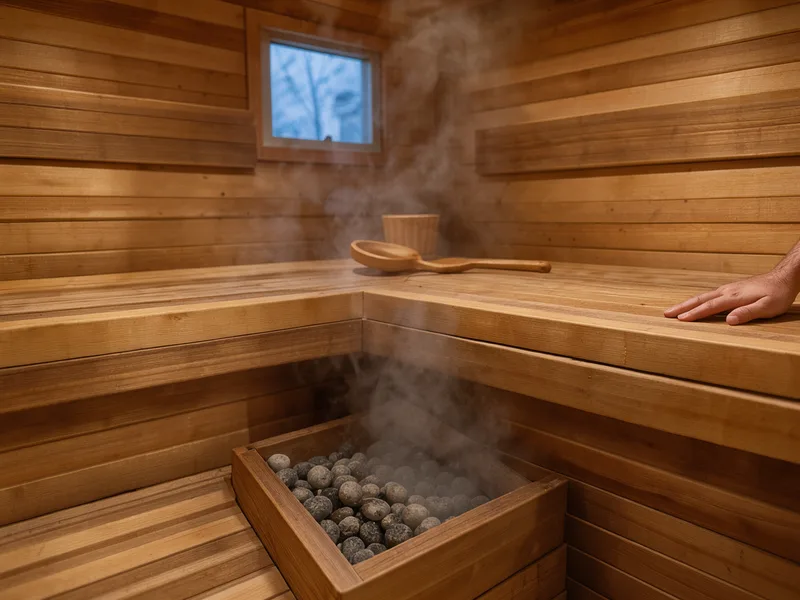
Hot air rises. In a sauna with two or three bench levels, the air at the top bench can be 20 to 30°F hotter than the air at the floor. This is not a quirk of your heater. It is basic convection, and it is the reason Finnish saunas are built with benches stacked vertically.
When you first enter, sit low. The lower bench gives you a gentler heat, and you can move up as your body adjusts. If you are building a sauna, this stratification is one reason ceiling height matters: a ceiling at 7 feet keeps the hot air close to the upper bench. A ceiling at 8 feet or higher lets heat pool above you, and the upper bench stops feeling hot.
| Bench level | Approximate air temperature | What you feel | Best for |
|---|---|---|---|
| Upper bench (top of stack) | 180 to 195°F (82 to 90°C) | Intense, dry heat; sweat starts within 2 to 3 minutes | Experienced users, short sessions, heavy löyly |
| Middle bench | 165 to 180°F (74 to 82°C) | Warm and steady; comfortable for 15 to 20 minutes | Regular sessions, most owners |
| Lower bench or floor level | 140 to 160°F (60 to 71°C) | Mild warmth; you can stay 20 to 30 minutes | Beginners, children, long relaxed sessions |
Starting Out: Beginner Settings
If you have never used a sauna, do not start at 190°F on the top bench. You will feel uncomfortable within two minutes and you will not learn anything about what you actually enjoy.
Set the heater to 150 or 160°F. Sit on the lower bench. Stay for 10 to 15 minutes. You will sweat, and that is the point. You do not need to push through discomfort. Step out, cool down, and come back for a second round if you want one.
Over several sessions, raise the temperature by 5 to 10 degrees and move up one bench level. Within a month or two, most people find their comfortable zone somewhere between 170 and 185°F on the middle or upper bench. There is no rush. The sauna will still be there next week.
How Löyly Changes What You Feel
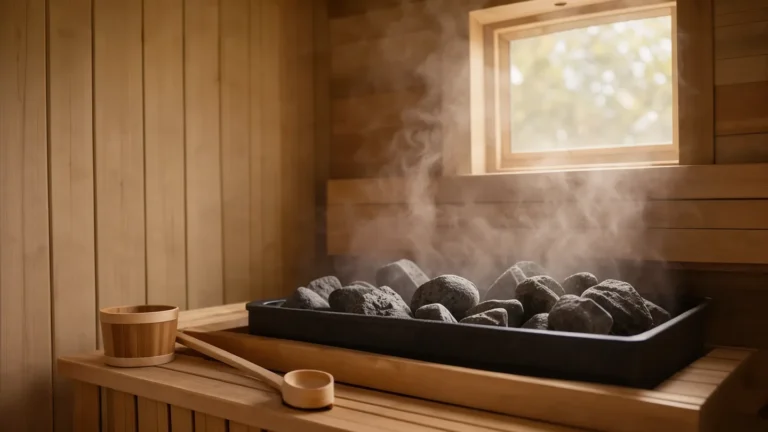
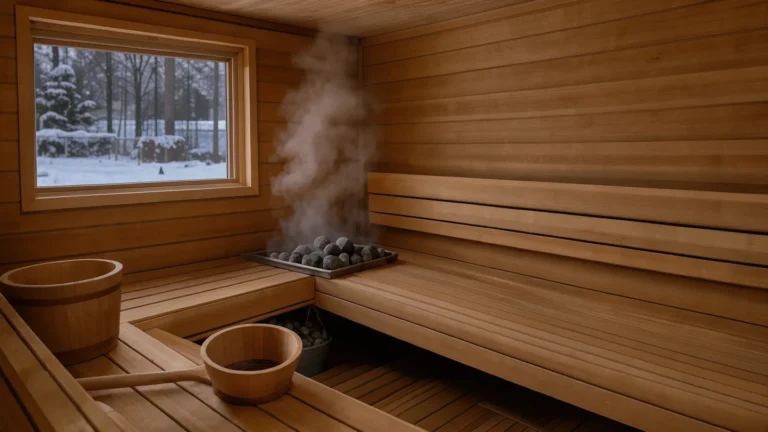
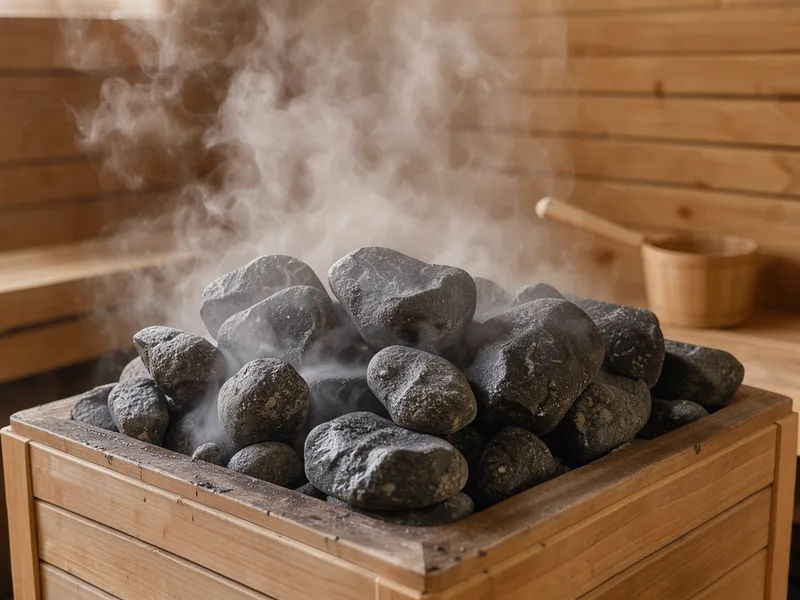
Löyly is the Finnish word for the steam that rises when you throw water on the hot heater stones. It is the single biggest variable in how a sauna feels, and it is the reason two saunas at the same thermometer reading can feel completely different.
A dry sauna at 180°F with no löyly feels hot but tolerable. Add a ladle of water to the stones and the humidity spikes. The same 180°F now feels much hotter because moist air transfers heat to your skin faster than dry air does. Your sweat cannot evaporate as easily, so your body's cooling mechanism slows down.
This is why experienced sauna users often run their heater at 170 or 175°F and rely on löyly to create intensity. You get the same felt heat at a lower air temperature, which is easier on the respiratory system and lets you stay in longer. If you are choosing a heater, make sure it has enough stone capacity to handle regular löyly without the temperature crashing. A heater with 40 to 80 pounds of stones holds heat well through a good steam burst.
Why Infrared Saunas Run Cooler
An infrared sauna heats your body directly with radiant panels, the way the sun warms your skin on a clear day. It does not need to heat the air around you first. Because of that, infrared cabins typically run between 120 and 150°F (49 to 65°C), well below the traditional range.
If you are comparing an infrared cabin to a traditional sauna and the infrared feels "not hot enough," that is expected. The heat penetrates differently. Your skin feels warm at 130°F in an infrared cabin because the panels are radiating directly at you. In a traditional sauna at 130°F, the air is barely warm and you will not sweat much.
The trade-off is this: infrared gives you a gentler, more even warmth with no löyly and no steam. If what you want is the Finnish experience of throwing water on stones and feeling a wave of steam hit your face, infrared will not give you that. If you want a warm, low-humidity session that you can do for 30 to 45 minutes without the intensity of a traditional sauna, infrared is a reasonable choice.
Before You Go In
Hydrate first
Drink a glass of water before you enter. You will lose fluid through sweat, and starting a session already thirsty makes you feel lightheaded faster.
Shower or rinse
A quick rinse removes surface oils and opens your pores. You do not need soap. Warm water is enough. This also means you are not bringing dirt into a room you will sit in for twenty minutes.
Check the temperature and bench
Glance at the thermometer. If it reads above 180°F and you are new, sit on the lower bench. If it reads below 150°F, give the heater another ten minutes or add a ladle of water to the stones.
Set a timer
Ten to fifteen minutes is a good first session. You do not need to guess. A sand timer, a phone timer, or a wall clock visible from your bench all work. Step out when the time is up, even if you feel fine.
Cool down between rounds
Step outside, take a cool shower, or sit in fresh air for a few minutes. If you want a second round, go back in. Most Finnish sauna sessions are three or four short rounds with cooling breaks between them.
Common Questions About Sauna Temperature
Is 195°F too hot for a home sauna?
No, 195°F is within the standard range and some owners prefer it. But it is at the top end, and it demands respect. If you are new, or if your sauna has a glass door that lets heat escape, you may find 195°F harder to hold than you expect. Most home owners settle lower.
How long should I stay in a sauna?
For a first session, 10 to 15 minutes. For regular use, 15 to 20 minutes per round is common. There is no rule that says you must stay longer. Step out when you feel ready, cool down, and come back if you want another round.
Does a sauna need to be that hot to work?
No. A sauna at 150°F with good löyly can make you sweat just as much as one at 185°F dry. The goal is warmth and sweating, not a specific number on a thermometer. If you are comfortable at 160°F, that is a fine sauna session.
Why does my sauna not reach 180°F?
Check three things: heater size relative to room volume in cubic feet, insulation quality, and whether the door seal is tight. A heater undersized for the room will never reach the upper range. A poorly insulated wall or a gap under the door lets heat escape faster than the heater can replace it.
Can I use a traditional sauna and an infrared sauna in the same room?
You can, but they serve different purposes and the wiring and ventilation needs differ. A traditional sauna needs a vapor barrier and a heater clearance zone. An infrared cabin is a self-contained unit. Most owners choose one or the other for a given space.