Types of Saunas: Every Home Option Explained
You have decided you want a sauna at home. Now you open a browser and find a dozen options: traditional electric, infrared, hybrid, barrel, wood-fired, outdoor cabin, indoor kit, portable. Each vendor swears theirs is the right one. None of them will tell you that an infrared cabin will not give you the steam you remember from a Finnish bathhouse, or that a barrel sauna will not fit in a seven-foot ceiling.
This page walks through every type you will encounter as a US homeowner, one honest paragraph each on how it heats, how it feels, what it draws in power, and what it typically costs. Then a comparison table so you can line them up side by side.
Key takeaways
- Traditional electric saunas reach 175 to 200°F (80 to 93°C) and need a dedicated 240V circuit; they are the closest match to a public Finnish sauna.
- Infrared saunas run cooler at 120 to 150°F (49 to 66°C), plug into a standard 120V outlet in many cases, and will not produce steam or löyly.
- Wood-fired saunas need no electrical connection but demand a chimney, a wood supply, and 60 to 90 minutes of preheat time.
- Hybrid saunas combine a traditional heater with infrared panels, giving you both steam and radiant warmth in one room.
- Price ranges overlap heavily: a well-built indoor kit and a mid-range barrel sauna can cost the same, so match the type to your space and heat preference before you compare prices.
Traditional Electric Saunas
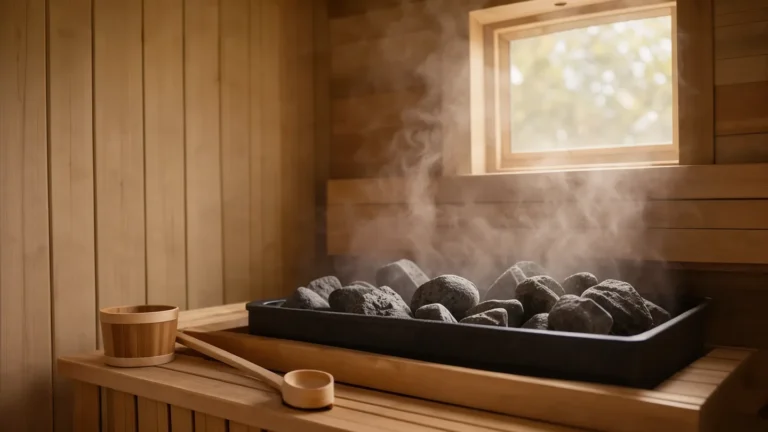
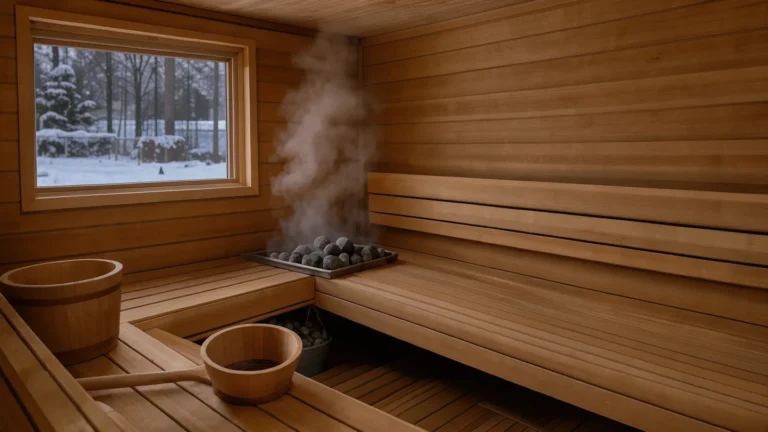
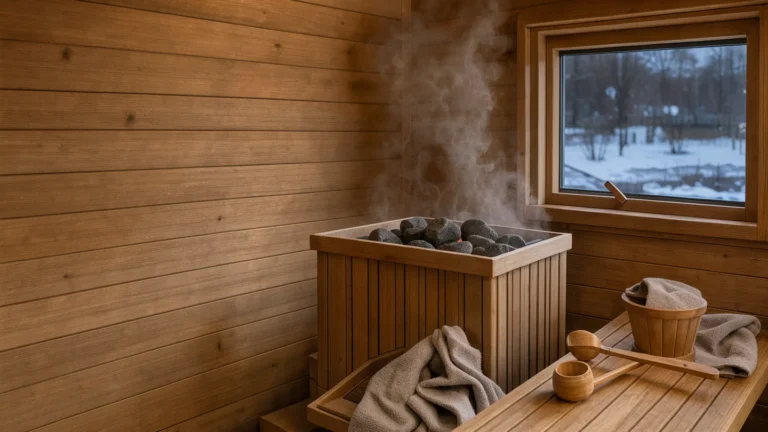
A traditional electric sauna uses a heater with exposed stones that radiates convective heat into the room, the same principle as a public Finnish sauna. You throw water on the stones to create löyly, the burst of humid heat that makes the air feel hotter than the thermometer reads. Room temperatures sit between 175 and 200°F (80 to 93°C), and the heater draws 3 to 9 kW depending on room volume, which means a dedicated 240V circuit sized by a licensed electrician. A typical 6 by 8 foot room with a 7-foot ceiling holds about 336 cubic feet and needs roughly 6 kW. Kits with pre-cut tongue-and-groove panels, a heater, benches and a door run from about $3,000 to $15,000 installed, depending on wood species, heater brand and whether you build the room yourself or hire a contractor.
Wood-Fired Saunas
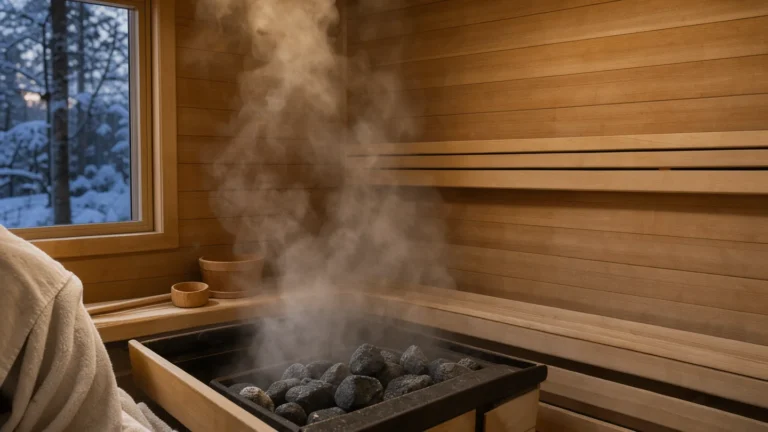
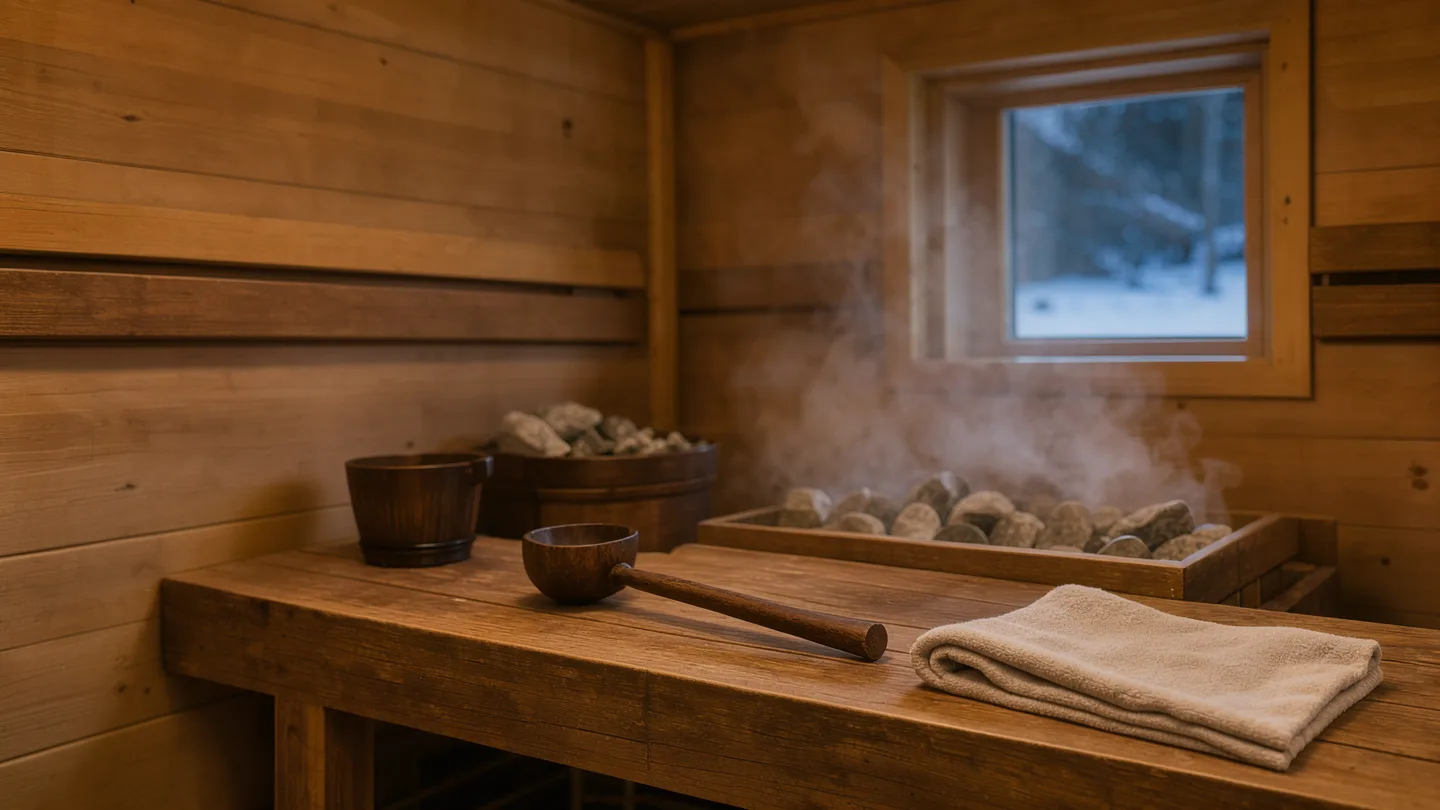
A wood-fired sauna heats with a stove that burns split logs, no electrical connection required. The stove sits inside the room or outside with a flue running through the wall, and the stones on top work the same way as in an electric sauna: you ladle water on them for steam. Temperatures reach 175 to 220°F (80 to 105°C), and the heat has a softer, more even quality that many owners prefer over electric. The trade-off is time and labor: expect 60 to 90 minutes of preheat, a steady supply of seasoned hardwood, and a chimney or flue that must clear local fire codes. A complete wood-fired sauna, whether a kit or a custom build, typically runs $5,000 to $20,000 or more. They are most common in rural settings where a wood pile is already part of the property and running a 240V line to a backyard structure would be expensive.
Infrared Saunas
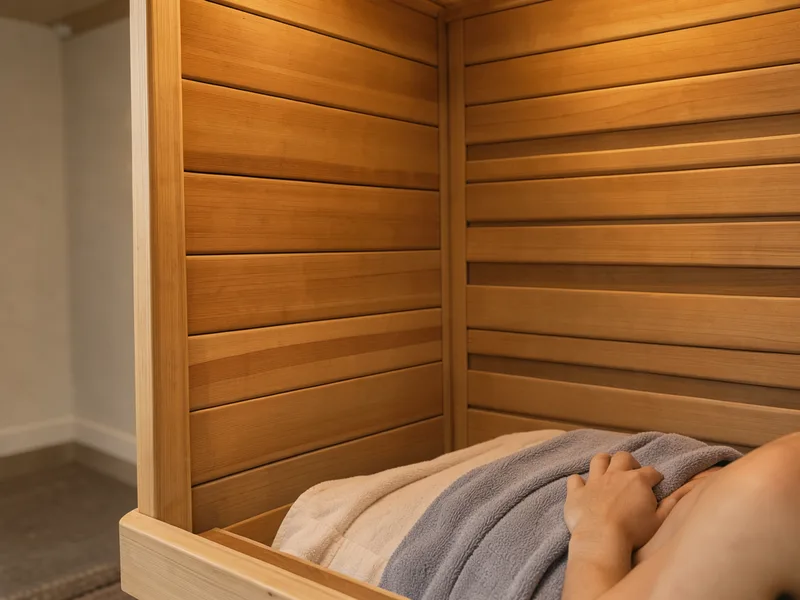
An infrared sauna uses carbon or ceramic panels that emit radiant heat directly into your body rather than heating the air first. Room temperatures stay lower, usually 120 to 150°F (49 to 66°C), which feels milder on the lungs but also means you cannot throw water on anything to create steam. Power draw is modest: 1 to 3 kW, and many single-person units plug into a standard 120V outlet, which is why they are popular in apartments and small bathrooms. A prefabricated infrared cabin costs roughly $2,000 to $8,000. If what you want is the ritual of pouring water on hot stones and feeling the humidity spike, an infrared sauna will not give you that. It is a different experience, and that is fine, but know which one you are buying.
Hybrid Saunas
A hybrid sauna puts a traditional electric heater and infrared panels in the same room. You get the option of convective heat and steam from the stones, plus the lower-temperature radiant warmth of infrared panels, sometimes in the same session. Temperatures range from 120 to 200°F (49 to 93°C) depending on which elements you run. Power draw is higher than infrared alone, typically 3 to 6 kW, so you still need a 240V circuit. Hybrid units are newer to the US residential market and cost roughly $5,000 to $15,000. They suit someone who cannot decide between the two heat styles and wants one room that covers both, though you pay a premium for that flexibility.
Barrel Saunas
A barrel sauna is a round or oval structure, usually made of cedar or spruce staves held by steel bands, that sits outdoors on a pad or deck. The curved walls reduce the volume you need to heat, so a 6-foot-diameter barrel holds roughly 150 to 200 cubic feet and warms faster than a square room of the same footprint. Most barrels ship as kits with an electric heater, though wood-fired versions exist. They run $3,000 to $10,000 for the structure and heater combined. The honest drawback: the curved walls mean less usable bench space than a rectangular room of the same exterior size, and the round footprint can be awkward against a fence or wall. If your space is a narrow side yard, a barrel may waste room you do not have.
Outdoor Cabin Saunas
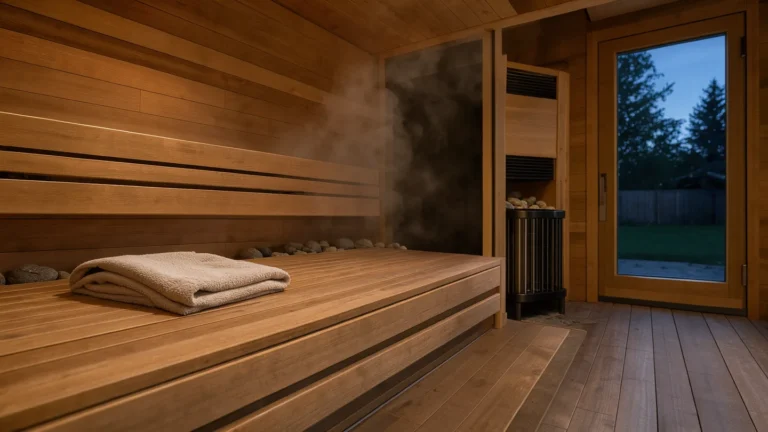
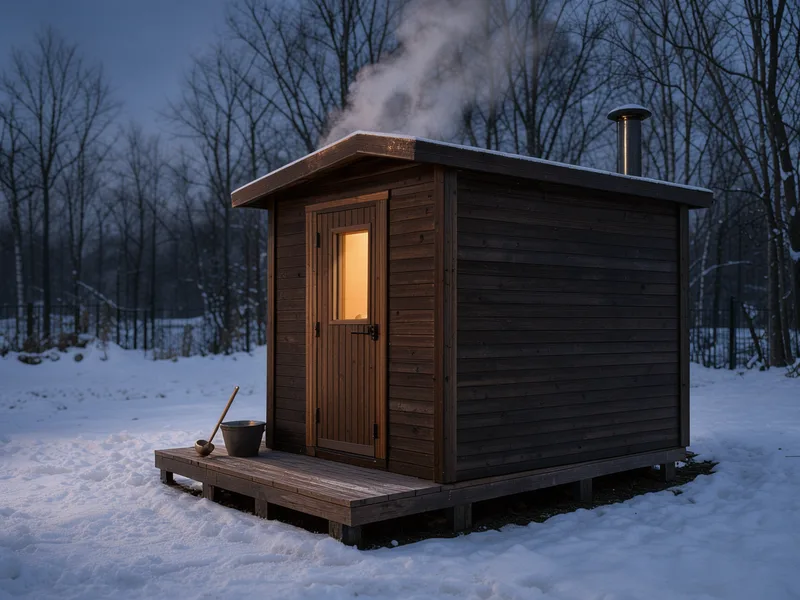
An outdoor cabin sauna is a standalone structure, often a small shed or A-frame, placed in the backyard with a traditional or wood-fired heater inside. It is the most common format in Finland and is gaining ground in the US for people with a yard and a 240V trench already planned. The cabin itself can be a prefab kit or a custom build on a concrete pad. Costs range widely: a basic prefab cabin with a heater starts around $5,000, while a finished cedar cabin with a deck and a proper foundation runs $15,000 to $30,000 or more. The advantage is separation from the house, which means no moisture or heat concerns indoors, and the option of a cold plunge right outside the door.
Indoor Kits
An indoor kit is a set of pre-cut, tongue-and-groove panels, a door, benches and sometimes a heater, designed to line a room you already have. You frame, insulate and vapor-barrier the room yourself (or hire a carpenter), then assemble the kit inside. This is the most common path for DIY builders who want a traditional sauna in a basement, garage corner or spare bathroom. Panel kits run $2,000 to $8,000 depending on wood species and room size, and you add the heater, wiring and ventilation on top. The total project cost for a 6 by 8 foot basement sauna, including the electrician, typically lands between $5,000 and $12,000. The kit does not solve your ventilation or vapor barrier questions, so read the manufacturer's instructions carefully before you close up the walls.
Portable Saunas
A portable sauna is a collapsible tent or pop-up enclosure, almost always infrared, that you set up in a room and store in a closet when not in use. They cost $500 to $2,000, plug into a 120V outlet, and heat to 120 to 140°F (49 to 60°C). The experience is functional but thin: the walls are fabric or thin plastic, so heat escapes quickly, and there is no löyly, no stones, no ritual. They work as a trial to see whether you enjoy infrared heat before committing to a permanent cabin, or as a temporary option for renters. If you want a real sauna experience, a portable unit is not it.
| Type | Temperature range | Power | Typical price range | Best for |
|---|---|---|---|---|
| Traditional electric | 175 to 200°F (80 to 93°C) | 3 to 9 kW, 240V | $3,000 to $15,000 | Steam, löyly, closest to a public Finnish sauna |
| Wood-fired | 175 to 220°F (80 to 105°C) | None (wood) | $5,000 to $20,000+ | Rural yards, no electrical run, traditional ritual |
| Infrared | 120 to 150°F (49 to 66°C) | 1 to 3 kW, 120V or 240V | $2,000 to $8,000 | Small spaces, lower power draw, milder heat |
| Hybrid | 120 to 200°F (49 to 93°C) | 3 to 6 kW, 240V | $5,000 to $15,000 | Wanting both steam and radiant warmth in one room |
| Barrel | 175 to 200°F (80 to 93°C) | 3 to 6 kW, 240V | $3,000 to $10,000 | Outdoor placement, faster preheat, compact footprint |
| Outdoor cabin | 175 to 200°F (80 to 93°C) | 3 to 9 kW, 240V, or wood | $5,000 to $30,000+ | Yard space, cold plunge nearby, no indoor moisture |
| Indoor kit | 175 to 200°F (80 to 93°C) | 3 to 9 kW, 240V | $2,000 to $8,000 (panels only) | DIY builders framing a room themselves |
| Portable | 120 to 140°F (49 to 60°C) | 1 to 1.5 kW, 120V | $500 to $2,000 | Renters, trial runs, temporary use |
Frequently asked questions
Which sauna type is closest to a public Finnish sauna?
A traditional electric sauna with a stone heater is the closest match. You get the same convective heat, the same stones, and the same ability to throw water on them for löyly. A wood-fired sauna is equally authentic and in some ways more traditional, since electric heaters are a modern convenience.
Can I put an infrared sauna in my bathroom?
Yes, and many people do. Infrared cabins are compact, draw low power, and often plug into a standard 120V outlet. The main concern is moisture: a bathroom already has humidity from showers, so make sure the sauna's electrical components are rated for damp locations and that the room has a working exhaust fan.
Do I need a permit for a backyard sauna?
In most US jurisdictions, a detached structure over 120 square feet requires a building permit, and any 240V electrical work requires an electrical permit. A barrel sauna under 120 square feet may be exempt from the building permit but still needs the electrical permit. Check with your local building department before you pour a pad or trench a cable.
Is a barrel sauna better than a square one?
Not inherently. A barrel heats faster because the round shape reduces interior volume, and it looks distinctive in a yard. But the curved walls cut into usable bench space, and the round footprint can be hard to place against a fence or wall. A square or rectangular outdoor cabin gives you more bench length for the same exterior dimensions.
What is the cheapest way to get a real sauna at home?
A portable infrared tent is the cheapest entry point at $500 to $2,000, but it is not a real sauna experience. For a genuine traditional sauna, the lowest honest cost is a small indoor kit (around 4 by 5 feet) with a 3 kW heater, framed into an existing closet or corner, totaling roughly $3,000 to $5,000 including the electrician.